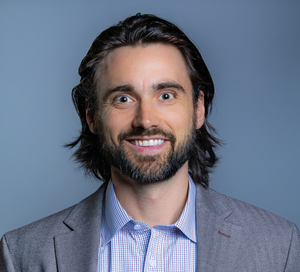
Chip Munn read The E-Myth on vacation in 2001, finished it at two in the morning, and sketched his first org chart on the only paper he had: the back of a paper plate. He kept that plate in his files for twenty years before finally scanning it. Chip has run Signature
Wealth in Florence, South Carolina since 2016, built it from three people into a 55-plus person advisor community, and still reads close to a hundred books a year while doing it.
We spend the middle of the conversation on what The E-Myth actually gave him: not a business plan, but a way of thinking in process and roles instead of hours worked. That's the book that got him separating the worker from the manager from the owner, decades before he'd ever heard the words "accountability chart." It's also, by his own account, the root of everything that came after — the EOS and Traction system Signature still runs on today grew out of the same instinct The E-Myth gave him in 2001, and Chip walks through the two years the firm quietly drifted off that system before bringing an integrator back in.
Later in the conversation we get to The Infinite Game and the hundred-year-firm filter Chip now runs every decision through, and to Strength to Strength, the book that gave him language for shifting from being the firm's best producer to training the next ones. He closes out a lightning round on audiobooks, a hammock on the South Carolina coast, and the value of a good reread.
In this episode
Why Chip reads nearly 100 books a year, and how "on-demand learning" replaces any running list
2001, on vacation, finishing The E-Myth at 2 a.m. and sketching his first org chart on the back of a paper plate — and why he kept that plate for twenty years
The accountability chart: what it means to be "in three boxes" at once as CEO, advisor, and advisor-development lead
Adopting EOS through Rocket Fuel and Traction, and the two years the firm drifted off-system before bringing back an integrator
The Infinite Game and the "hundred-year firm" filter — how a long time horizon changes a concrete decision like hiring
Strength to Strength and the shift from Luke Skywalker to Obi-Wan: what it takes to stop producing and start developing the next generation of advisors
Founding Signature Wealth in 2016 to bridge the gap between retiring advisors and the next generation coming in
Books mentioned
Notable quotes
"It opened my eyes to the idea of process and the ability to do things in a repeatable fashion." — Chip, on discovering The E-Myth on vacation in 2001
"If I have a problem, chances are somebody smarter than me has had it before, and wrote a book about it." — Chip, on why he reads nearly 100 books a year
> "Winning the infinite game is getting to keep playing." — Chip, on Simon Sinek's The Infinite Game and the hundred-year-firm filter he runs every decision through
Chapters
(00:01) Welcome, and the hundred-books-a-year opening
(00:40) Why Chip reads: standing on the shoulders of giants
(02:01) On-demand learning: how he decides what to read next
(04:34) AI, ChatGPT, and his brother the AI-focused business school dean
(05:50) 2001: discovering The E-Myth
(08:10) The paper plate: sketching the first org chart at 2 a.m.
(11:14) Buying back your time before you can design the business you want
(14:12) EOS, quarterly rocks, and adopting the "hundred year firm" filter
(16:08) The two years Signature drifted off EOS, and why they brought an integrator back
(18:49) Traction: L10 meetings and structured communication
(21:06) Barry Dedge and the role of the integrator
(22:31) The accountability chart: being "in three boxes" at once
(27:58) The Infinite Game and building a firm to outlive him
(30:42) How the hundred-year lens shows up in hiring
(34:22) Strength to Strength: from Luke Skywalker to Obi-Wan
(37:03) Advisor development day, mentorship, and thirteen years of sobriety
(39:27) Founding Signature Wealth in 2016 to bridge two generations
(40:45) Lightning round: audio vs. hard copy, hammocks, and rereads
(43:05) Where to find Chip
About the guest
Chip Munn is CEO of Signature Wealth Group and a Senior Wealth Advisor with Raymond James Financial Services, based in Florence, South Carolina. He graduated magna cum laude from Clemson University, taught sixth grade for a year, and entered the industry in 1998 before founding Signature in 2016, a practice he's since built from three people into a 55-plus person, 15-office advisor community across the Southeast. He's a six-time Forbes Best-In-State Wealth Advisor and the author of Leap Before You Look and *The Retirement Remix*, and he hosts the Maximum Advisor and SignatureLife Show podcasts. He and his wife, Trish, a photographer and former WBTW News13 anchor, have four sons; two now work alongside him at Signature.
Connect with Chip
Read the full transcript
This transcript has been lightly edited for readability.
Welcome
Matt CosgriffThis is The Advisor Library, where serious advisors, operators, and leaders sharpen their thinking. A community built around a simple idea. Books shape who we become and the firms we build. Each episode, host Matt Cosgriff sits down with an advisor, operator, or leader in wealth management to talk about the books and ideas that shaped how they think, lead, and serve. Books change leaders. Leaders change firms. Chip Munn, welcome to The Advisor Library. It's great to have you.
Chip MunnYeah. Thanks Matt. Great to be here.
Why Chip reads
Matt CosgriffSo I'm super excited to chat with you today. I think in a lot of ways you epitomize sort of the perfect guest. As I was researching for the episode, I saw you wrote an article, I think it was a few years ago. It was like something like the six must read books for a growth advisor. I know you're an avid reader yourself, and you're actually an author, so excited to dive into all of those topics here today. But where I thought I'd start is just, you had mentioned at one point that you read up to nearly a hundred books a year, give or take. And so I just want to start with a simple question. And so why do you read?
Chip MunnI guess the short answer is I kind of believe the best for those of us in the investment business, the best investment that we can make is in ourselves. And I would argue that the highest return on investment I've ever had in my life has been some of the books that I've read. So that's the short answer is that I just think that my general life philosophy is if I have a problem, chances are somebody smarter than me has had it before. And wrote a book about it. So it kinda is the idea of standing on the shoulders of giants. That's really kinda how I am for the entirety of my life, both before and after, or at least after college, right? Nob nobody wants to read or study while they're in school. But when push came to shove, it was certainly something I found to be incredibly helpful for me all the way around.
Matt CosgriffSo just given the volume of how many books a year you're reading, one of the challenges I find is just deciding what to read. So I'd just be super curious, like how do you decide what to read when you're reading the volume that you are?
Chip MunnI think the biggest thing for me is that I kind of believe in on-demand learning. So there's almost always something that I need to know about. And to be fair, I do listen to some of them. So that's incredibly helpful. But for me, Matt, most of it every now and then I'll reread a few of the things that are classic to me. But what I find is a lot of times I'm I've always got something that I'm working on. That's really kind of my go-to strategy between books and podcasts. And oftentimes what I will find is that the next book finds me more so than the other way around. So I'll give you an example. One of the more recent books that I've been reading is called Ninja Selling. But it's for real estate agents. It's very relationship driven, very much works in our business, but I read that because my wife recently started in real estate and it was one of the books that was recommended to her. My wife's a big reader too. And so we share ideas back and forth. I try to make it relatively organic and kind of follow the flow of my life.
Matt CosgriffDo you keep a running reading list or use an Amazon or OneNote or something? Like how do you keep a r list or when you do find them, how do you sort of keep track of what comes next?
Chip MunnI'm a 10 quick start and I get about a thousand ideas a minute. And so most of the time, honestly, I email them to myself and I have a filter in my email that puts the books all in one place. But honestly, what I find most of the time is by the time I want to go to the list, something new and more timely has come up. So I don't have a lot of open windows in terms of needing to go back and look. It's always something new. And even a lot of the old books, I find myself going back and reading a lot of things now that were written years ago. But if you listen to any podcast, there's always somebody with a new book coming out. And I just kind of I go where it takes me.
Matt CosgriffYeah, that's awesome. One of the things I've tried to start playing around with is using ChatGPT and putting the books I've read and I've liked. And then before I read one or if I get recommended one, I'll sort of ask, Hey, does this align with a past books that I've liked and read? It's actually sort of surprisingly accurate. So anyway, something to explore.
Chip MunnVery true. My brother is a PhD economist. He is the dean of a business school and is really interested in AI. And one of the things that he had suggested to me, and I have done it, is to go to Chat GPT and to prompt it to say, based on everything you know about me, what are the three books that you would suggest or some variation of that? And they were they were very helpful.
The E-Myth and the paper plate
Matt CosgriffI have to imagine if you did that or you continue to do that and you sort of continue to give feedback, it's only going to train it to be more accurate to sort of your tastes. I'd love to pivot maybe back to kind of the earlier parts of your career. Again, I mentioned at the onset that you wrote an article, I think it was for financial planning, about six books that are really oriented for growth oriented advisors. And one of the books that I think you led with was The E Myth by Michael Gerber, which is a tremendous book for those that aren't familiar. But maybe take us back to that point in your career, like w where were you coming from and why was that so influential at the start of your career in the wealth space?
Chip MunnWell, I don't recall exactly how I stumbled onto the e-myth. Surely even back then, some sort of list somewhere. But so I read the e myth in roughly 2001. For anybody who's not familiar, it's the entrepreneurial myth, is what the e myth stands for. And back then I was a sixth grade school teacher for a year prior to becoming an advisor. And when I transitioned into financial services. So I got into this business in ninety-eight and it was very much still more of a sales job than it was a business. At least it was for me. Where I am is not where I thought I was going. And so somehow I stumbled on the E-Myth by Gerber and it opened my eyes to the idea of process And the ability to do things in a repeatable fashion. And that just for whatever reason it resonated with me. One of the things that I found is that developing processes and things like that, quite honestly, as somebody who has tons and tons of ideas, allows me to keep things moderately simple. But then what it led me to do at the time, there were my partner and I and an administrative professional. And it allowed me its suggestion was essentially you look at your ideal future, create the org chart and put your name in all the boxes. All the boxes that you're in, essentially over time as you build out your organization towards that ideal future, you bring along team members to essentially replace yourself. And so the idea of processes, but also then advanced planning. Kind of a future organizational chart for me was incredibly helpful because it gave me a design, much like I would for a client's financial plan. It gave me a design for where I was going and that made decisions an awful lot easier. I still go back to the E myth from time to time just to revisit some of those core truths, I think.
Matt CosgriffAnd so what was the size of the business again at that time and sort of as you plotted that out, like how far out did you go? Did you plot it to twelve people, fifty people? Like, do you remember?
Chip MunnSure. Well, so interestingly, so in two thousand one ish, I finished the book at like two o'clock in the morning and the only paper that I had was a paper plate. I was on vacation and that's where I do most of my best thinking, by the way. And so on the back of a paper plate I drew out and ultimately, Matt, I think that original drawing, which I still have, I've digitized it. Wow. Now I carried the paper plate for probably I say carried it. I kept it in my files for probably twenty years. And four or five years ago I just photocopied it and scanned it so I would have it. And it had nine boxes, including what even then I term shareholders. Sure. It had nine boxes. Well there were only three of us at the time. Yeah. And it had nine boxes. To give you an idea of when it was written, some of which included cold calling and things that we don't even do anymore. And so that's one of the more interesting things now looking back is how much the business has changed, but also how much kind of the core philosophy of unique ability and some of those things we have different language for now, how much those parts have stayed the same.
Matt CosgriffFor those that might be say, well, if you're gonna do that, but then the world changes and so the seats aren't gonna be the same, like what would your response be? 'Cause I feel like there's so much value in that exercise, even though you and I both know it's not gonna be exactly right.
Chip MunnWell, well, we're planners for a living. Yeah. Right. We sit down, I look at all of this. So my general planning philosophy for anything is A to B. A is where we are, B is where we wanna be. We wanna get from point A to point B with as little uncertainty as possible. So if we look at it that way in the same way we would a financial plan, I mean that's the same thing our clients will say to us. Well, why should I put together a financial plan? Things are gonna change. What if I get fired? And so I think it was Yogi Berra one time that said if you don't know where you're going, you might end up someplace else. Yeah. So I feel like the goal of it isn't to be right, it's to be directionally accurate in the same way that if we set a GPS course to drive ourselves to go on vacation, we know where we're going or where we think we're going. That doesn't mean there won't be traffic or a roadblock or some sort of issue where we reroute. What I find Frankly, is that the idea of not planning is often some sort of reluctance or lack of clarity on where it is you want to go. And that's okay. But ultimately, at some point you have to figure out at least what you're working toward with the understanding and giving yourself the grace that can change.
Matt CosgriffThe org chart typically comes after sort of the vision. So did you sit down and think through like what kind of business you wanted to build and then sort of then sketched out the org chart that would support that? Or how did you think about the vision? I'm super curious, just given what you've built, how that vision came about.
Chip MunnThat has evolved, right? I think originally going back to there, what I first wanted to do was to organize the business I felt like we had and all the different parts of it that I was doing that may or may not have been the most productive use of time, et cetera. So I often think a lot of times in practices that I work with, unless and until you get to a place where you can buy back your time in the business you have, it's hard to think about the business that you want. I didn't know enough back then to I was twenty five years old with two years of experience. But what it allowed me to do was say this is the business I have, including being the cold caller, including being the person who did the financial plans or the person who prepped seminar materials. And then I could say, okay, if at some point I could stop doing this part. And in doing that long enough and eventually having a partner who has been one for my partner and I've been together since I was twenty-three years old, twenty-seven years. And having a partner who, as we had the opportunity, would help create capacity for each of us, because you have to invest early, usually before you need it, in order to be able to fill some of these boxes, it created enough space to then again get into things and some of the concepts of books of today of what do you want it to be like. I think the first thing is you got to get your arms around and digest what you've got. Yeah. But then the next thing as quickly as possible is to understand where it is you think you want to go. Again right now, AI, big shift, since I started, since I originally put together that first plan on the back of the paper plate. We've gone through zero commission trades almost since then. The internet was founded. It's hard to believe, it just changed so much. But again, my belief is that the core things of a this business being a people business hasn't changed. And so again, getting directionally accurate and then periodically thinking through I'm you mentioned earlier rocket fuel and Traction and the ten year vision and the three years, all those things are really important. But I also think you kinda have to have firmly held beliefs, grasp like l but you gotta hold some of them loosely. Yeah. Because things are gonna change.
Matt CosgriffDo you go through that exercise of sort of reevaluating the vision and the strategy and the org chart each year? Or now that you're the CEO of a really impressive business, which we'll get into more in a second, like how often are you sort of revisiting some of those frameworks and aspirational aspects of the future?
Chip MunnSo we operate on EOS. Great. We review them quarterly in terms of the operations of how we are going about it. One of the things for me, I adopted a filter back a couple of years ago of wanting to build a hundred year firm. Something that's going to be around, it's going to outlive me, multi-generational teens serving multi-generational families. And that then isn't going to change. So the vision is to help as many people as possible live what we call their signature life, but to do it in such a way that it's going to be around for a hundred years. So the big picture of helping people and being around a really long time is the core filter. That doesn't change. Working backwards though, I mean the tactics have to, right? I think you kind of build a plan, a more tactical plan a year at a time. EOS would say you have three to five rocks a year that you work backwards through and then you chunk it down essentially. You work on it for a bit and you reevaluate where things are. A lot can change in a year in terms of details, but most of the time a year isn't long enough to require a quick change to your long term plan.
EOS, Traction and the accountability chart
Matt CosgriffI spent about ten years at a regional accounting firm in their wealth group and we used EOS and so I'm a huge Traction in EOS fan. I just I have seen sort of the transformative power for organizations that are scaling. When did you first read that and did that immediately a prompt you guys to start using EOS or were you using something previously or how did that come about?
Chip MunnSo I stumbled into EOS via Rocket Fuel. So that was the first book in that space that I read because it spoke to me as a and I don't necessarily love the term visionary. It seems a little bit pie in the sky, but as somebody who is driven by new ideas, I love new information, new ideas. The idea of the fact that I needed to partner with somebody who could help sift through those in a really honest way and determine which ones of them were actual and which ones weren't. That was my first kind of entry into that, to be honest. We went on down that road. We self-executed. Yeah. Then we hired an implementer and we did it for a year and got good and organized and decided we could do it on our own again. And so we did it on our own poorly for about two years. And then last year when, again, it's not different than a lot of things. And then you go, you know what? I do need some outside help and accountability. And that has been a game changer just in terms of keeping clarity. Now I will say during the two years that we weren't working with our integrator. Having done the work for the first year and then later again kind of drifting away and looking back, we still got a lot of the stuff accomplished. So just doing the work on the front end was incredibly helpful. But I'm convinced we would have been that much farther along with the clarity o of working with somebody. So again, I long way S A and came to it through rocket fuel, but have become very much a as an entrepreneur, I'm a bit of a all over the place.
Matt CosgriffLike any good visionary, right?
Chip MunnWell, you want to kind of rage against the machine and fight the process. But one of the things I guess maybe as I've aged that I've tried to accept is they put lines on the road for us to drive between for a reason. And you can drive faster on a road with lines than without because you got no fear of at least what other people are supposed to do. So I definitely think that I have become a better practitioner by accepting some of the stu again. Easy to read a book on something, often hard to actually follow through on doing it over and over again.
Matt CosgriffThose that aren't familiar, Rocket Fuel I think you'd probably say like the sister or cousin book to EOS and Traction, both written by Gino Wickman. And even before you said it, it was just interesting hearing you talk earlier and it was sort of evident that you're clearly a visionary just given, your visions in 2000 and also some of the ideas that you've had. I'd be curious just quick on the on the Traction book. Is there one piece I know a lot of it's really important, the system is important, but is there one or two pieces that have been particularly helpful to your business as you think about really just operationalizing things and building systems in the business?
Chip MunnMe, the core concept that I've taken away is the importance of regular clear communication and having a structured way of doing that. You know, they have the they call them the L ten meetings that you have with your leadership team and then the same page meeting between the visionary and the integrator, who is kind of the primary, I'll say operator of the system. And for me, again, it's easy as a relationship person just wanting to have ad hoc conversations. And if I need you, I'll talk to you and vice versa. Just the structured, clear, purposeful communication is probably the biggest takeaway for me because it everything builds on top of one another. And it is foundational from my perspective. And again, that's coming from somebody who doesn't necessarily love loves everybody else to be structured. What I find is in most organizations that have more than one person, communication is typically the make or break component. And for us, Traction and the EOS system has been a way for us to have a framework. I'm a big believer in frameworks, to have a framework for how we structure that communication.
Matt CosgriffTraction is like shockingly simple. You'd probably agree. There like there's nothing in there that is like remarkably revolutionary. But I think that's the power of it is it's so simple. And if you really apply it, like you said, like if you have a coach, if you get the discipline to apply it, it can be transformational. Maybe one last question on that. Who is the integrator in your firm then? Do you guys have a COO or a president or how to ops? Like who integrates?
Chip MunnYeah, we have a president. So his name's Barry Dedge. I came from a regional broker dealer prior to starting our independent firm with Raymond James. And Barry was on the executive team there. And so gosh, it's been seven years. We had left and started signature. He left and was doing some consulting and we got he and his partners to come in and consult for us to look through structurally some of the things that we were doing, what suggestions they would have. And when they came back, then I asked him like, look, what would it take for you to come and actually help me execute all those things? So if you looked at our accountability chart, I have I my name is still in multiple boxes as we have grown. But what I don't do is run the day-to-day operations of the organization because while I consider myself to be a reasonably good advisor still and I like to do advisor development and I am the visionary, it's imperative to me to have somebody whose specialty is running the organization. And frankly in our world, who doesn't have client responsibilities, they're just taking care of the advisors and the team that run the business.
Matt CosgriffCan you say more quick about the concept of having your name in multiple boxes? I know EOS and Traction talks about the importance of sort of sketching that out, but may it's sort of on the surface it seems odd, right? To put why not just put yourself in one box with all the different things you do. Maybe just say more and kind of educate the listeners maybe that aren't familiar with that book.
Chip MunnSure. If you think about it, right, every advisor has you wear multiple hats, whether you admit it or not. Yeah. And the larger you get, the more confusing it can be. So again, most advisors would consider themselves and going back to the e myth, the worker, the manager, and the owner, or some variation of that. And for me, and y each one of those roles is accountable for something. And so in the EOS world, they call it the accountability chart versus an organizational chart because essentially it lists what you are accountable for. Each role is accountable for certain things. So for me, the ability to be in multiple boxes, each of which has some core functions that I'm accountable for, is very freeing despite the fact that I'm in three of them. Because I can look at those three boxes and say, is this whatever I'm thinking about, worrying about, or about to do? Is this mine or is it not mine? And I can look at my advisor box. Again, kind of imagine a hat. If I have my advisor hat on, there are a handful. I'm responsible for our proactive service schedule for the clients that I work with. I'm responsible for service and follow up or whatever those things are. And it's either mine or not mine in that box. In our world as it stands right now, I then also sit in the advisor development box because as I said earlier, multi-generational firms. So we have lots of younger advisors. I'm a teacher at heart. So there are a handful of things that are involved in that specific to training our current generation, our rising generation. I don't love the term next generation because they're already here and doing the work, but I'm accountable for those things. But beyond that, my next box is that of CEO, face, voice, major relationships, those kinds of stuff. Culture. And there's a lot of stuff in between advisor development and CEO that by putting myself in a box, it has given me the freedom to say, not mine. Yeah. An example would be something that came up in a different division of our company, right? That's not advisor related and it's not big, big picture. That's not mine. Because between me, the CEO, and that particular thing, there are two or three other folks who have accountability before it should become something that I'm having. I've gone through times, Matt, where I felt like I had to be involved in everything. And so while the idea of multiple boxes or multiple hats could seem overwhelming, for me it's the opposite. Because, again, good fences make good neighbors. And so for me, it creates some boundaries that I need that are helpful for me. Yeah, that's kind of the way I look at that. Yeah.
Matt CosgriffIt's taken the who not how concept and sort of putting it on paper a little bit. It's funny, I wrote a guest blog for Kitces probably about 10 years ago on Traction and the number one thing people reached out requesting was I had just offered to give them like a sample of our accountability chart. And so it's certainly something people are thinking about and I just appreciate how thoughtful you have been in terms of sketching that out, even if maybe you don't have people in each of the boxes for future hires.
Chip MunnWell, and I would even go so far as to say, Matt, now we should look at the various forms of technology and the way that they can fill the box. You know, one of the things that I'm working with our younger advisors on, so we have three advisors, we're filling this in what, August, that have started within the last eight weeks after graduating from college. And I firmly believe that the technology available allows them to be able to do more better and faster. And so I really think that in a way it has the ability to be one of the boxes. It can be a tool and not necessarily a person. Or you can look at it from the standpoint of it allows everybody to be bionic in terms of adding that to their capabilities. And I think that's a another area of where rather than being afraid of it and the change and the directional shift has the potential to be a real enhancement on our organization's top to bottom. Yeah.
Matt CosgriffCould probably spend a whole episode just sketching out the organizational or accountability chart I should use in Traction terms of the future. I'd love to pivot. You said something earlier that was really interesting. You're building a hundred year company. I'd be curious where that came from and if, if there's particular books you look back on that say that was sort of the impetus or that's helped shape your thinking around that.
Chip MunnSo the concept of where it came from was with all the MA and all in our industry, there's been a big push towards fast results. And what I believe is as you when you figure out what you're building towards, you make different decisions. So if you were looking for a PE exit or some sort of roll up strategy, then you would behave a certain way. But if your primary filter is that of a hundred-year firm, then you'll make different decisions. I would say the book that is most impactful to that line of thinking would be Simon Sinek's The Infinite Game. And looking at the there is no winning or losing in business. You're either playing or you're not. He compares games and I'm I may get some of this wrong, but I would highly encourage anybody to read the book. It's fantastic. But he compares, say, a football game with a baseball game. Football game has, depending on the level, a certain number of minutes in each quarter, a certain number of quarters, and there's a an ending that has a time limit on it. It's finite. A baseball game on the other hand literally could last two hours or seven hours, depending on the speed of play. The idea in the book of the infinite game is that winning the infinite game is getting to keep playing. And so for me, that was a big idea moment that I grasped onto, which is that there is no winning because what I have found is as we have grown in the same way we deal with clients, right? I have a client recently with ten million dollars and that was his goal for his happiness. And when we got to nine point eight million dollars, the goal became twelve. And I think that we can do that in business. For somebody who's motivated by numbers, winning is twenty percent farther than where I am. Kind of the gap of the game to throw another book in there. Very, very similar. It changed my mind to say the goal is to keep being around and to be able to keep playing the game. And in doing that and understanding that playing the game was the win, it gave me a lot of peace in being able to make long term decisions because we're in the business of compounding. We talk about that a lot in terms of money, but in reality, relationships compound, knowledge and wisdom compounds. Like why these things just take time. So if we're playing an infinite game, it gives us an awful lot of time to let compound in on all fronts do its work. I love it.
The Infinite Game and the hundred-year firm
Matt CosgriffThat we're in the business of compounding both for our clients, but also just like you said in the in the in our businesses. Is there a way that shows up day to day? Like can you point to a decision that was, made differently because you have that hundred year lens, or is it more like a cultural kind of feeling aspect? How does how does that show up?
Chip MunnFor one, it shows up in hiring. Right. One of the things that I see often because part of our business has been in providing succession plans for advisors who get to a point where they would like to move on to their next non-business chapter. And what I see often time, everybody wants an advisor with five years experience right now.
Matt CosgriffThey're in demand right now.
Chip MunnVery few people want to hire an advisor. Five years and in five years they'll have an advisor with experience. So that's probably the most evident place for me is that historically we've always gone back to we've always hired before we needed it and taught and developed people because eventually you will wish you had that person and you will it I equate it, Matt, I'm a football fan. It's gonna be football season soon. You can either recruit high school players and develop them, or you can go to the transfer portal and hope it works out. And our business is very similar to that. And so I think that the best commitment to an endless game is just people and talent. And is understanding that it takes nine months to make a baby, it takes five years to of experience to have an advisor with five years of experience and the ultimate kind of long term play is to continue developing people that'll be around for a really long time because again, you're building the people who build the business.
Strength to Strength
Matt CosgriffYou're probably a bigger college football fan than I am, but just sort of paying attention to the transfer portal and nil and all that, it just it seems like when you can transfer in and out of a school each year and whether or not you like the coach or plan enough, like that generally doesn't feel like that's good for culture. It feels more transactional. And so I think what I'm hearing you say is that, if you really have that long term vision and get people that you're gonna invest in and develop, they see that and they feel that. And I have to think that shows up day to day in the culture and frankly in the way you care for clients. Is that Does that feel like that fits kind of how you're thinking about it?
Chip MunnThink so. I mean I think how you do anything is how you do everything. And yeah, my twenty-seven year old son who's next door, I've heard him say it over and over again and I take credit for it, even though maybe I heard it from him at some point. But the truth is how we take care of our people is how they ultimately take care of their clients or of our clients. I do think people know when you care authenticity is one of our core values. Like be who you are, whoever that is. And when you're bringing people along with the expectation with a brand new grad advisor track person that we don't need you to produce for ye several years. And we need you to add value. That's not the same. Yeah. Our goal for our newest folks is within the first month Find something that you can do for somebody else, whether it's changing light bulbs, taking out the trash or building financial plan. Find something that because you're here somebody has something they used to do they never have to do again because you're here. I think it permeates everything.
Matt CosgriffLove that. You don't have to produce, just add value. That's really important.
Chip MunnNo doubt.
Developing the next generation of advisors
Matt CosgriffSo you started the business or back in 2000, it was around three people. Today I think it's north of 50, 50 or 60, if I'm not mistaken. So 15 to 20x, the number of employees. How has your thinking changed going from running us what was arguably a small firm to, arguably much bigger firm as CEO? What's changed in your thinking and what books have helped shape that reimagining? How do you think about that?
Chip MunnI would say again, as you grow and as you age, you start to understand that success is kinda in the agency of others. I think Scott Galloway maybe said that and that at some point you can't do everything and you have to build other people. And probably the most I don't know that revolutionary is the right word, but the book that really shaped my thinking in the last couple of years most and it's now the most gifted book that I have is Strength to Strength by Arthur Brooks. It is very difficult for somebody who has grown up with the idea that they are Luke Skywalker going out and slaying everything. And the idea of eventually becoming Obi-Wan or Yoda, who is training the next generation can be a difficult mental shift. And I think strength to strength for me. It gave a language to that I could understand that was kind and generous that again just helped me kind of attach to the idea that now part of what I want to be able to do is take that crystallized intelligence that we might call wisdom and share it or pair it with a young person who may have A different level of technical expertise or frankly energy and want to be able to partner the wisdom of somebody with experience with the energy of somebody with youthful ignorance. It's a heck of a combo. But strength to strength, really, for me, and I shared it with lots of folks who are outside of our business, it just gave a language to something that I was already feeling. And when you pair that with the idea of a hundred year firm or an infinite game, th those two together are pretty powerful for me.
Matt CosgriffHow do you operationalize that? I love the concept. I unfortunately haven't read the book yet, but we'll definitely be adding that to the to the reading list. Is there have you guys done something specifically to make sure that you're taking that crystallized intelligence and helping transfer that to the in the generation that's coming up? Yeah.
Chip MunnAnd so for me became very real. I have two sons now in the business. And so all of this together means that it kind of adds up to a the idea that I'm in the advisor development seat. So Monday of this week, we did an advisor development day and our I'll say younger advisors, our younger advisors from four weeks of experience to let's say ten years. And going backwards to do training with them on basic things. And the idea that, at least for me, pairing people along that continuum in one group. Matt, October I'll have been sober for 13 years. One of the things that I learned in one of the 12 step programs is the notion that new people remind people with many years of sobriety what it was like to be new. And people with many years of sobriety show new people that there's hope and that there's a path. That's part of what we've tried to do with advisor development is to take the fact that again we're all on that road and then I utilize some of the advisor, the senior advisors, more experienced advisors in our community as faculty. If you will, to come in and pour in different kind of levels of wisdom. That's how it has manifested with me is just organizationally to share the concept and to model the concept. And it really has just taken root. Aga I can't overstate, I think, the importance of Brooks' ability to put language to something that a lot of times we feel and having that language gives a lot of freedom, I think, to be able to embrace it. That's
Matt CosgriffReally profound. I think you probably agree that's one of the challenges our industry has is there's a lot of advisors retiring. There's not enough young advisors coming in and it really feels like you guys have found a way to systematically tackle that challenge in a really thoughtful way, both for the G1 advisor, I would argue, and also the G2, right? It feels like there's something that each party is gaining sort of in that partnership.
Chip MunnNo doubt. And the scariest part and the most difficult part in a lot of practices is if you're not careful. And honestly, the impetus, kind of the hypothesis when we founded Signature in twenty sixteen, was the idea that there were sixty somethings who were going to want to phase out. There were lots of twenty somethings who wanted to come into the business, but that the gap was too big in a lot of case. They had let it go. And I see this all the time. It had gone too far. That it felt like a bridge too far. And so again, our hypothesis, which we've proven to be true over the last 10 years, is that may be a bridge too far in a lot of cases. But by bringing in a late 30s to early 50s something, you can bridge that gap in a way that everybody can ultimately win. Again, between baby boomers and Gen Z, there's such a I have a hard time understanding. I'm a Gen X guy, understanding both of them sometimes, but there's such a language gap and a just a difference in a lot of cases that I have found it to be helpful to try to bring together some sort of in-between interpreter, if you will. Yeah.
Lightning round
Matt CosgriffThat's awesome. I wanna wrap here because I want to be respectful of your time. I know we're coming up to the end here. At some point we'll have to have you back. I'd love to hear more about how you became an author. But I want to wrap just with a quick section. It's a bit of a lightning round, but just got a couple questions for you. So are you a hard copy, Kindle, or audiobook guy? Well,
Chip MunnAudio.
Matt CosgriffI suppose you don't highlight then if it's audio. How do you take notes or do you sort of remember all the stuff that you've read when you're listening to audiobooks?
Chip MunnProbably should've said both, 'cause most of the time if I find anything valuable, I end up owning both the audio and the hard copy so that I can dog ear and underline. I don't do Kindle because I've never gotten technologically savvy enough to figure out how to do the underlining and the Kindle. And I love books. So I find audio easiest to use, but paper and hard copy is easier to keep top of mind.
Matt CosgriffYeah, and there's something to be said just sort of about the tactileness of a physical book and for sure. Being able to look at it and remember some of the takeaways. Favorite place to read or listen to an audiobook?
Chip MunnAudiobook is just anywhere riding in my car. Favorite place to read a physical book. I live down near the coast of South Carolina is laying in a hammock in my backyard.
Matt CosgriffI love that. And then are you a reread's favorites kind of guy or do you just always move on to the next book?
Chip MunnI'd say in any given year I reread about ten percent. So probably ninety ten. Ten out of a hundred books or some form of reread, re listen, and then I love new information.
Matt CosgriffIs that driven mainly just by what's happened in your life? Like, hey, this book I'm going through this challenge and I wanna refresh on this concept or
Chip MunnTri mine or somebody else's, right? One of the books I've reread recently is one called The Effective Executive by Peter Drucker. I don't remember if it was written in the seventies or eighties, but it was because I wanted to refresh my mind on some basic organizational principles because somebody that I was working with needed some help. So I just wanted to go back to the original source. So a little bit of both.
Matt CosgriffAwesome. Well, thank you so much, Chip. This has been an awesome discussion. I appreciate you sharing your crystallized intelligence and wisdom with the audience. For those that want to get in touch with you and/or signature wealth, where can they find you? Your podcast, I think is the retirement remix and some of the books you've written. How can they get a hold of you?
Chip MunnSimplest way is just to go to our website, signaturewealth.com. To be honest, Matt, I'm not super hard to find. Yeah. But the other chipmunk out there on socials is a race car driver. So if you get somebody who looks too cool, that's not me. But happy to be a resource any way I can. Really appreciative of your bringing me on and asking great questions. Awesome. Touch.
Matt CosgriffThanks so much, Chip. Look forward to staying in touch.
Chip MunnAll right. Thanks. Bye now.
Matt CosgriffThanks for listening to The Advisor Library. For book reviews, episode notes, and our newsletter, visit TheAdvisorsLibrary.com. Subscribe wherever you get your podcasts so you never miss a conversation. Books change leaders. Leaders change firms.